
Adana
Ancient city on the Seyhan River, heart of Cilicia.

Basak · CC0
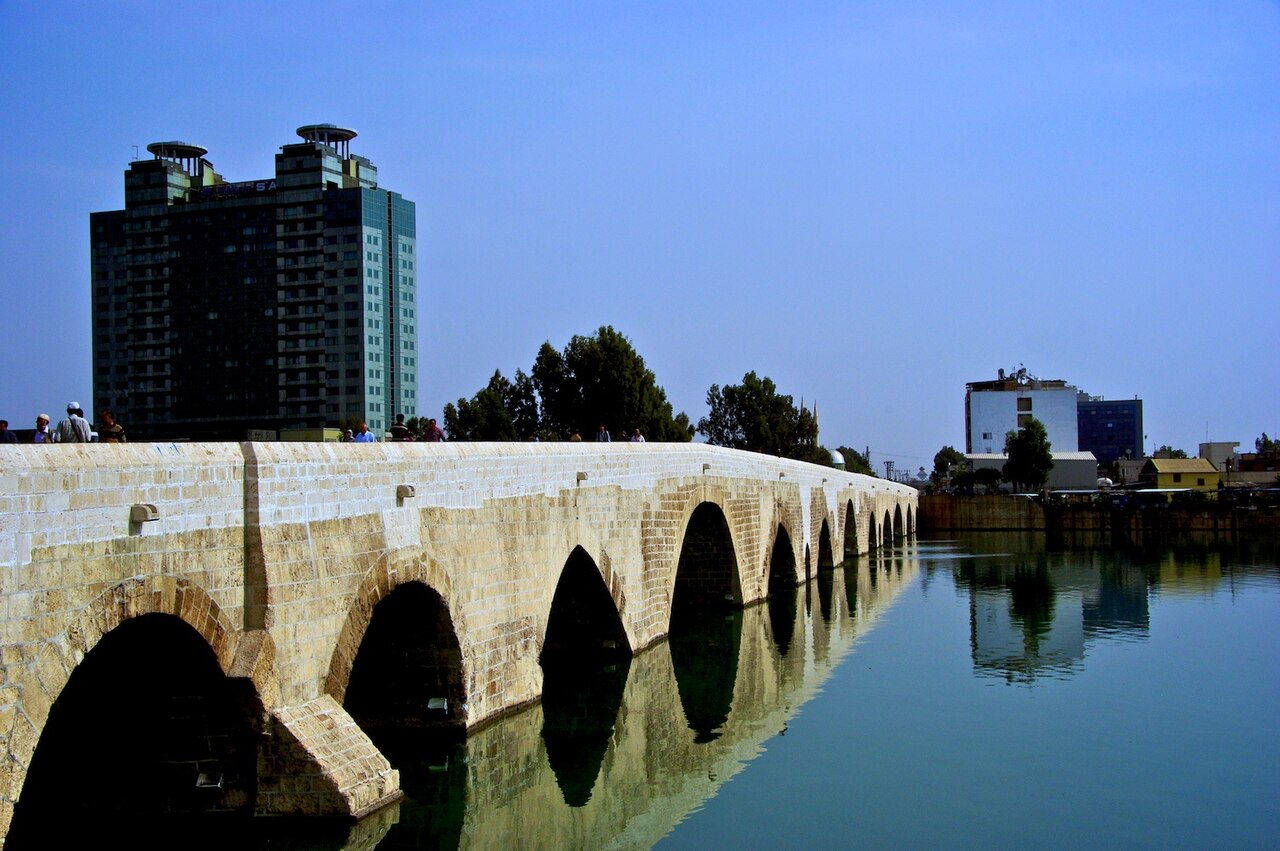
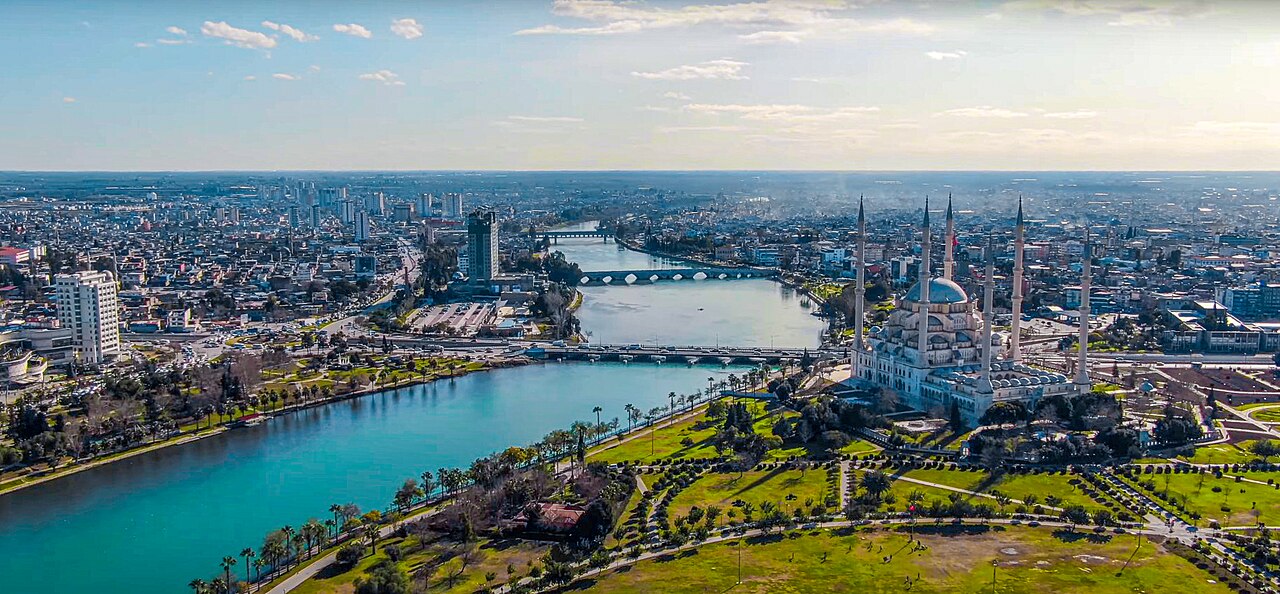
Adana is a large city in southern Turkey, situated on the Seyhan River 35 km inland from the southern shores of the Mediterranean Sea. The city lies in the heart of Cilicia, a region of around 6 million people that was particularly important in the classical world due to its location by a pass in the Taurus Mountains and its wealth in metal and agricultural assets.
- location
- Southern Turkey, on the Seyhan River
- region
- Cilicia
- known_for
- Regional trade, agriculture, healthcare, logistics; historical capital of Quwê and the Ramadanid Emirate
- language_etymology
- Turkish: [aˈda.na]; Armenian: Ատանա; Greek: Άδανα
Lore & Background
The name Adana has been used for over four millennia. One theory suggests it may derive from an ancient Anatolian or Indo-European root meaning 'on the river', though this is not widely accepted as definitive. Greco-Roman legend attributes it to Adanus, son of the Greek god Uranus. According to Ali Cevad's Ottoman Geographical Dictionary, a local legend attributes the name to Ebu Süleym Ezene, though he is not a historically attested governor appointed by Harun al-Rashid. The Neo-Hittite Quwê state was centered on Adana and protected by the Neo-Assyrian Empire. Later, in the classical period, the region of Cilicia developed under various influences. The Mopsos dynasty is historically attested in Neo-Hittite and Luwian inscriptions, but these do not describe a Greek migration unifying Cilicia; the claim of post-migration unification remains speculative.
Reader's Guide
Adana's significance stems from its millennia-long role as a regional center in Cilicia, a strategically vital area linking Anatolia to the Levant. Its location by a pass in the Taurus Mountains made it crucial for military campaigns and trade routes, while the fertile Çukurova plain and metal wealth sustained its economy. The city served as capital under the Neo-Hittite Quwê state, the Mopsos dynasty, and later the Ramadanid Emirate. Under Abbasid rule, it saw rapid growth during Harun al-Rashid and Al-Amin. In the Armenian Kingdom of Cilicia, Adana continued as a center for handicrafts and international trade. The city remains a hub for regional trade, agriculture, healthcare, and logistics, connected to Tarsus and Mersin by TCDD train, with the closest public airport being Çukurova International Airport.
Did You Know?
- Adana's name has been used for over four millennia, with one theory linking it to an ancient root meaning 'on the river', though this is not a standard reconstructed form and is not widely accepted as definitive.
- Under Seleucid rule, the city was sometimes referred to as Antioch on Sarus, though this was not its standard historical designation.
- Adana was the capital of the Ramadanid Emirate, a de facto independent Türkmen emirate from the mid-14th century until the early 16th century, when it became an Ottoman vassal.
Geography and Modern Economic Life
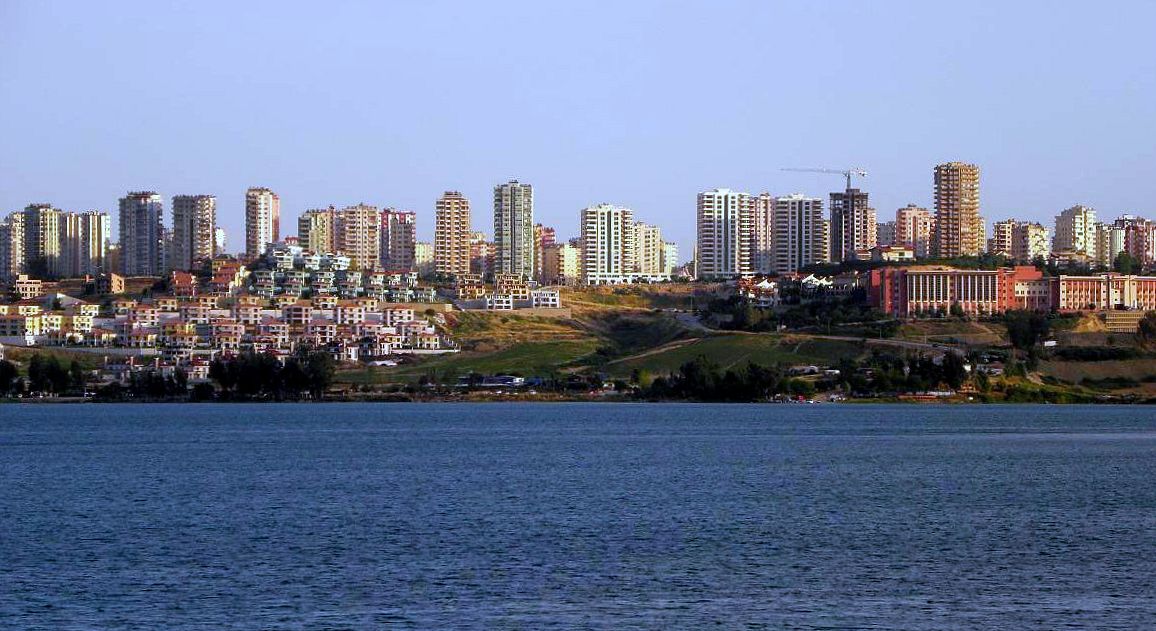
Adana sits along the Seyhan River, roughly 35 kilometers inland from the northeastern Mediterranean coast, anchoring a metropolitan area that spans four districts—Seyhan, Yüreğir, Çukurova, and Sarıçam—and houses approximately 1.8 million residents. The city functions as the administrative capital of its province and serves as the commercial and service hub for the broader Cilician region, home to around six million people. Its economy rests on agriculture, healthcare, and logistics, and it maintains rail links to the coastal cities of Tarsus and Mersin through TCDD services. Air travel is handled by the nearby Çukurova International Airport. The city's position in the fertile Çukurova plain, combined with its proximity to the Taurus Mountain passes that historically channeled both armies and trade caravans, has kept it a vital node for regional commerce and public services into the modern era.
The Name and Its Ancient Roots
The name Adana has been in continuous use for more than four thousand years, appearing in Turkish, Armenian, and Greek forms. One linguistic theory traces it to an Indo-European phrase meaning "on the river," sharing a Proto-Indo-European root with the Danube, Don, Dnieper, and Donets. A Greco-Roman legend instead credits Adanus, a son of the Greek sky-god Uranus, who supposedly founded the settlement beside the river alongside his brother Sarus, after whom the waterway was named. Some scholars have also linked the name to the Danaoi, the Greek warriors of the Trojan War referenced by Homer and Thucydides. Ottoman-era sources offer yet another explanation: Ali Cevad's geographical dictionary records that local Muslims attributed the city's name to Ebu Süleym Ezene, a governor appointed by the Abbasid Caliph Harun al-Rashid. The multiplicity of these origin stories reflects the layered cultural history of the region.
From Kizzuwatna to the Seleucids
The area around Adana was inhabited by Luwian and Hurrian peoples who, under the name Kizzuwatna, governed themselves autonomously while remaining under Hittite protection. The Neo-Hittite Quwê state then centered on Adana, later falling under Neo-Assyrian suzerainty. Greek migration in the 8th century BC brought the Mopsos dynasty, which made Adana its capital. Locals renamed the city Antioch on Sarus to signal loyalty, and Seleucid rule lasted over two centuries before Armenian King Tigranes II absorbed Cilicia as a vassal in 83 BC.
Faith, Councils, and the Byzantine-Sasanian Frontier
Cilicia's religious landscape was remarkably pluralistic. Under early Roman rule, Zoroastrianism—introduced by the Persians—continued to be practiced alongside Judaism, which attracted numerous local adherents. The city also featured prominently in the Byzantine-Sasanian rivalry. The region's strategic position between empires made it a recurring flashpoint for nearly four centuries.
Gallery

Frequently Asked Questions
What is Adana?
Adana is a major city in southern Turkey that sits along the Seyhan River, roughly 35 km inland from the Mediterranean coast. It occupies the center of the Cilicia region and has long served as a hub for trade, agriculture, and logistics.
Where exactly is Adana located?
The city is positioned on the Seyhan River in the heart of Cilicia, southern Turkey, about 35 kilometers from the Mediterranean shoreline. Its placement near a pass through the Taurus Mountains made it a strategic crossroads in the ancient world.
Why is Adana historically significant?
Its geographic position by the Taurus Mountain pass and the surrounding wealth in metals and farmland made Cilicia—and Adana at its center—a key player in classical-era trade and politics. The city also served as the historical capital of both Quwê and the Ramadanid Emirate.
What is Adana known for in the modern era?
Today the city functions as a regional center for trade, agriculture, healthcare, and logistics. It anchors a broader Cilician region home to approximately six million people.
What are the different names for Adana across languages?
The city is rendered as 'Adana' in Turkish (pronounced [aˈda.na]), 'Atana' (Ատանա) in Armenian, and 'Adana' (Άδανα) in Greek. These variants reflect the layered cultural history of the Cilician region.
More in Cities Of The World 1-24
Elsewhere in the Cities Of The World universe
Spotted an error? Know more?
This is a living reference — every entry is fact-audited, and reader corrections feed straight into our audit queue. Suggest an edit · See this site's audit record