
Adelaide
Capital of South Australia, founded as a free colony.

Photograph by Doug Barber · CC BY-SA 3.0
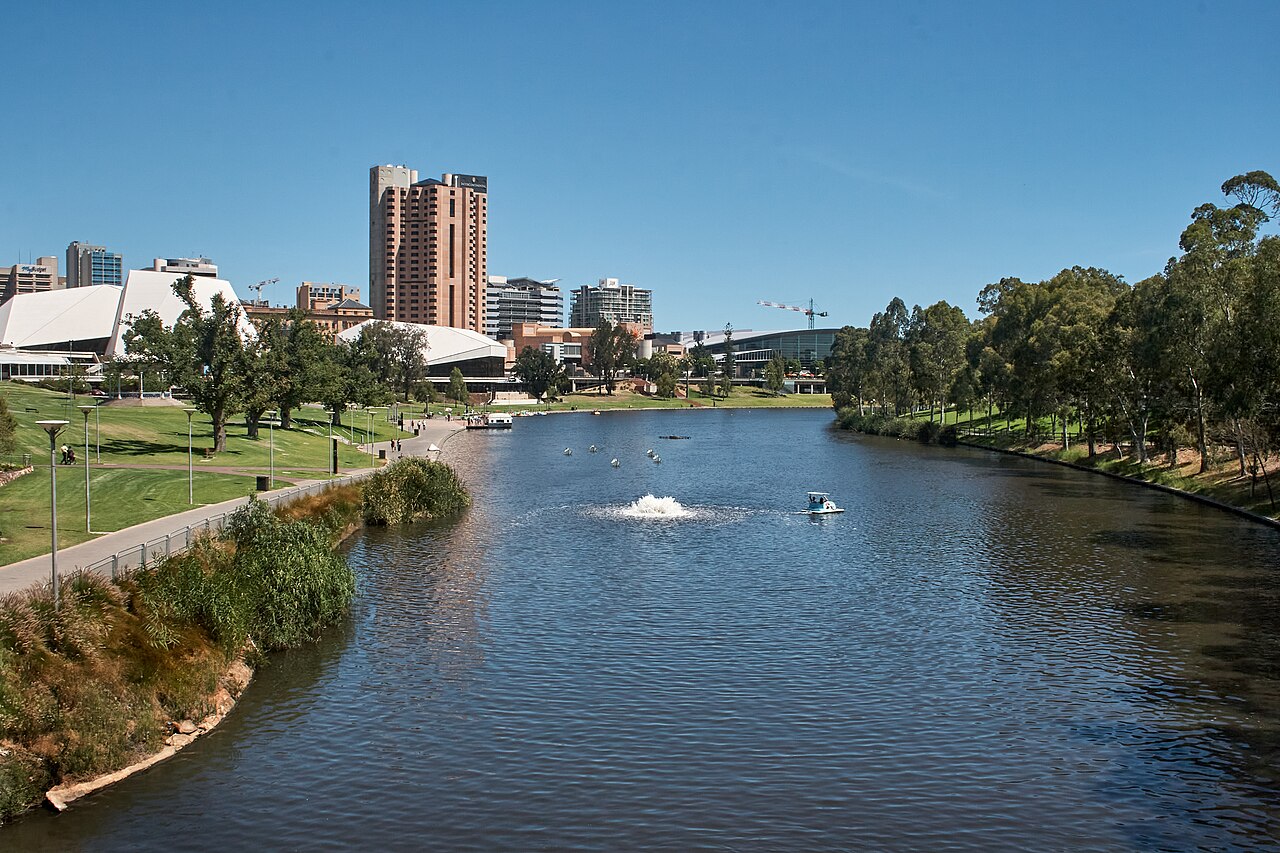
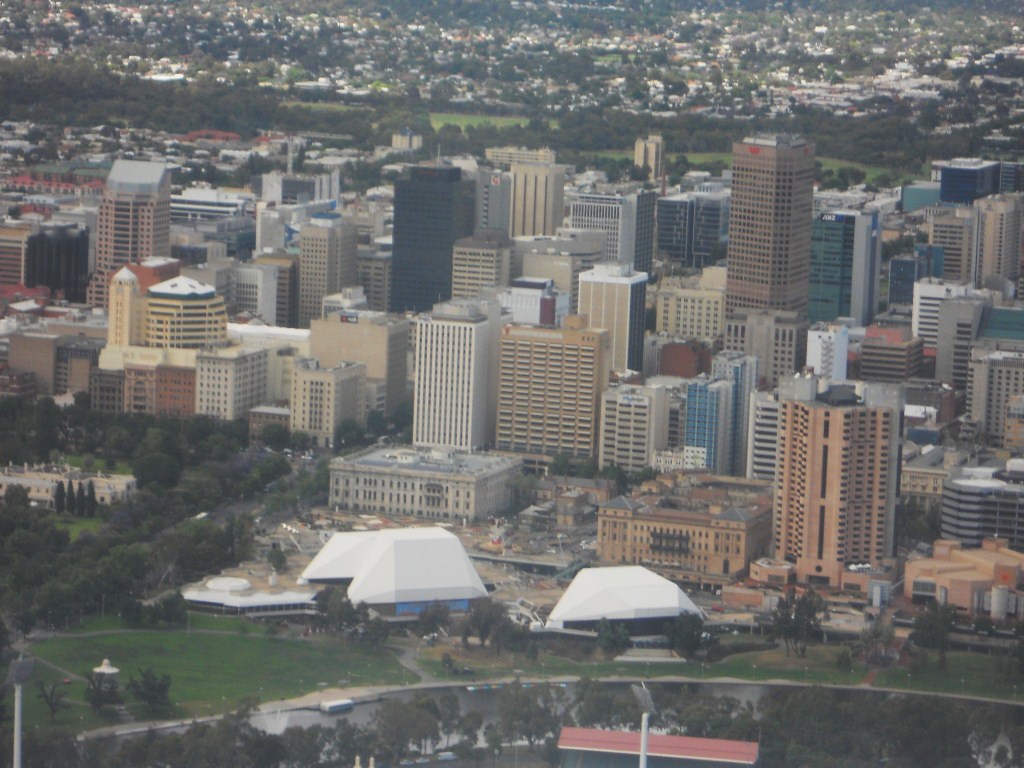
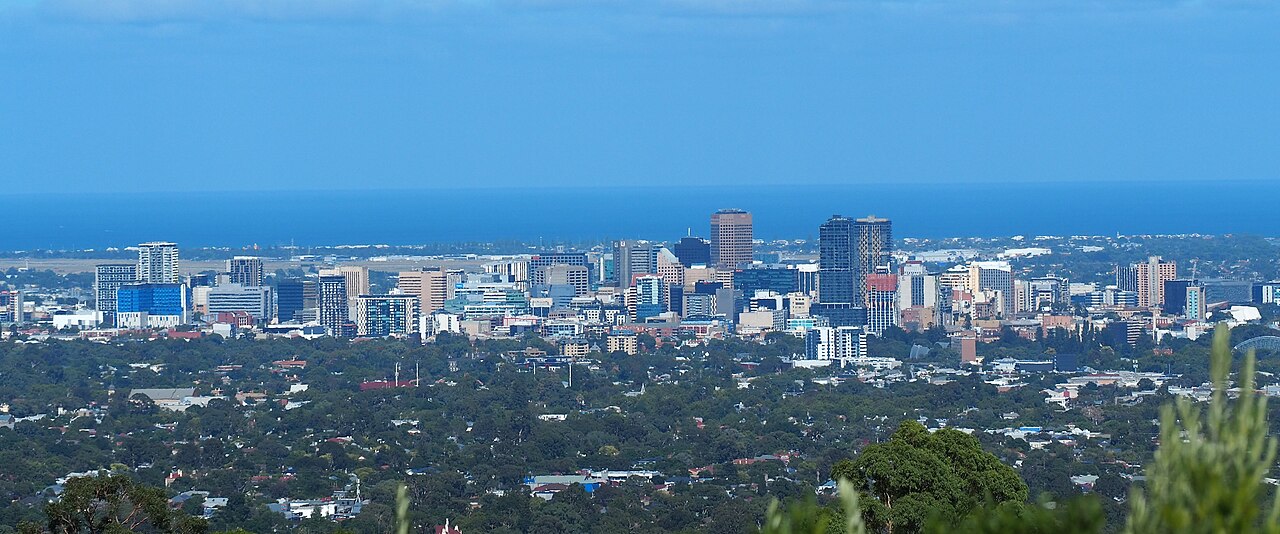
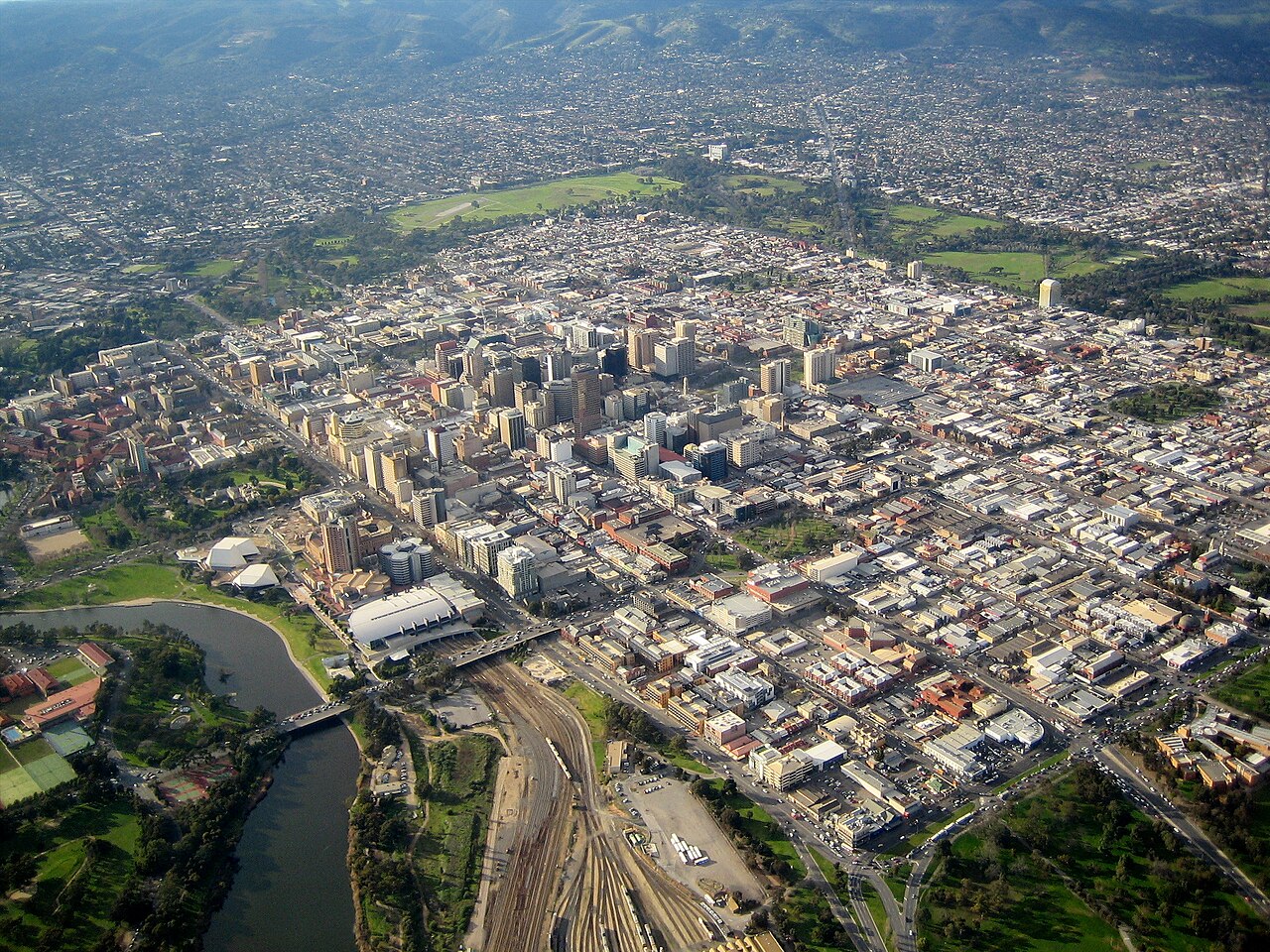
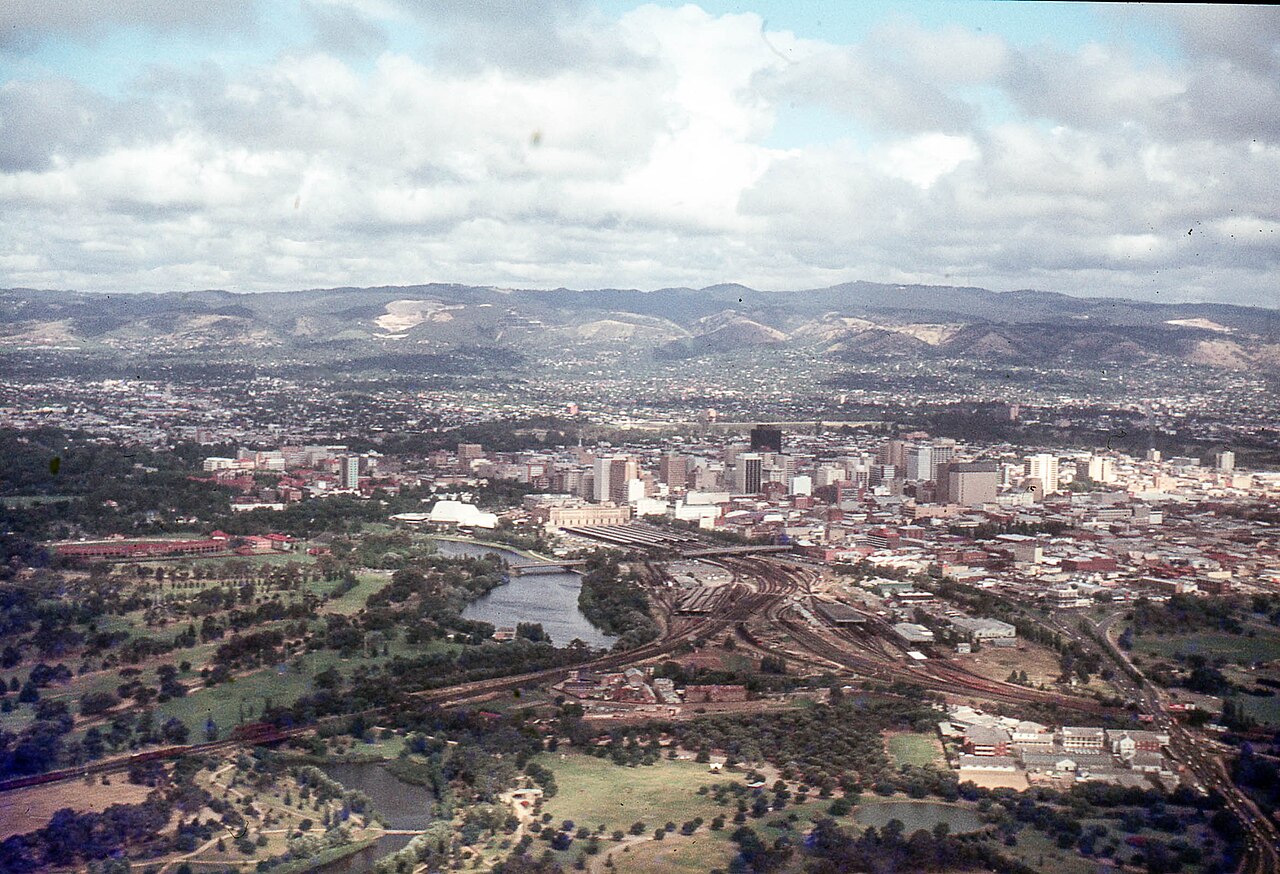
Adelaide is the capital and most populous city of South Australia, and the fifth-most populous city in Australia. The city is known for its grid layout designed by Colonel William Light, its surrounding parklands, and its status as a cultural and economic hub.
- country
- Australia
- state
- South Australia
- population_rank
- Fifth-most populous city in Australia
- demonym
- Adelaidean
- traditional_owners
- Kaurna people
- known_for
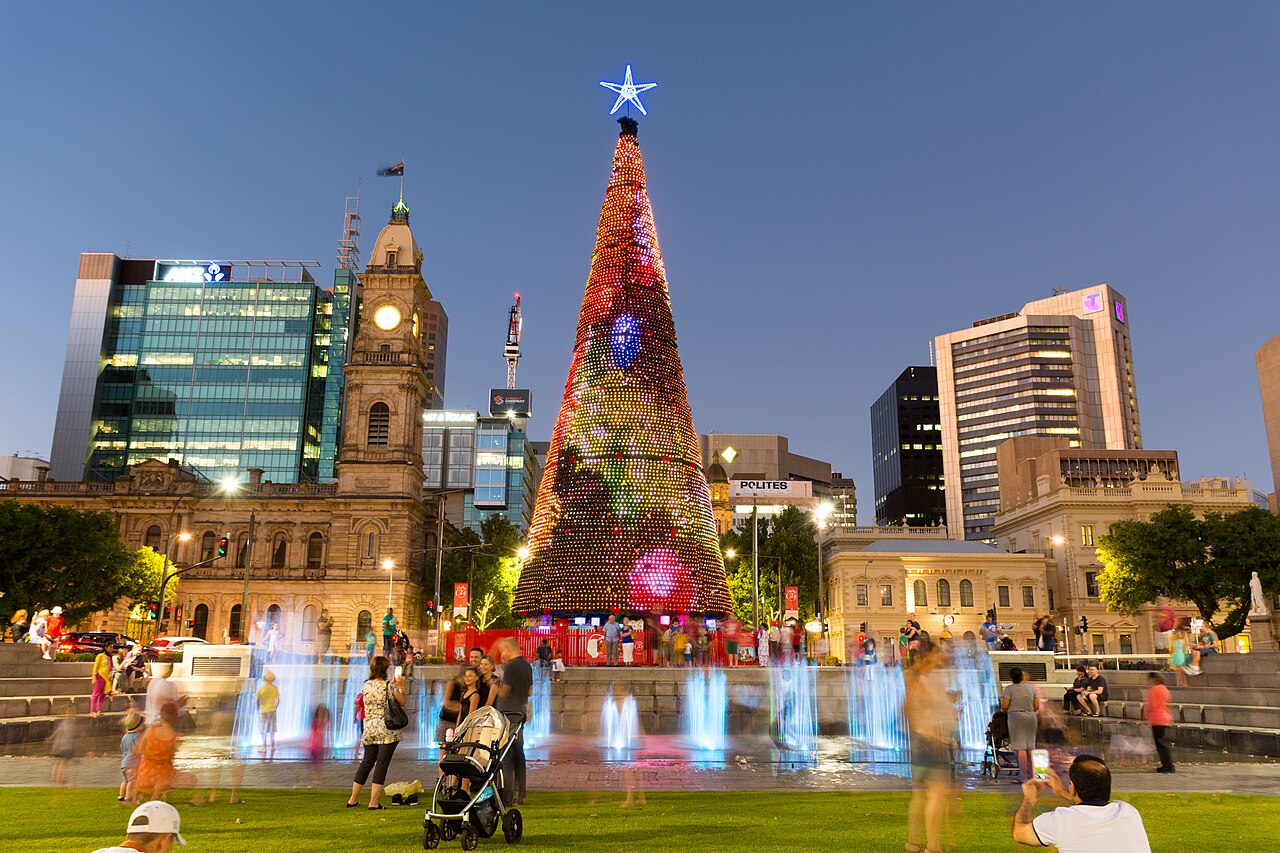
- Planned free settlement, City of Churches, festivals, automotive industry
Lore & Background
Colonel William Light designed the city centre in a grid layout with wide boulevards and public squares, surrounded by parks, a design now listed as national heritage. The city was named for Queen Adelaide, wife of King William IV. The area was originally inhabited by the Kaurna people, who called the city centre and parklands Tarndanya, meaning 'male red kangaroo rock'. Within decades of European settlement, Kaurna culture was nearly lost, but modern revival efforts include renaming local places with Kaurna names. The city became known as the 'City of Churches' due to its diversity of faiths. It was Australia's third-most populous city until the postwar era.
Reader's Guide
Adelaide's significance lies in its origin as a planned colony of free settlers, without convict history, based on Wakefield's land-sale model. This shaped its early development and social structure. The city's design by Colonel Light, with its grid layout and surrounding parklands, remains a distinctive heritage feature. Adelaide became South Australia's government and commercial centre, with activity concentrated along North Terrace and King William Street. It is classed as a Gamma + level global city by the Globalization and World Cities Research Network. The city is connected by bus, train, and tram networks operated by Adelaide Metro, and served by Adelaide Airport and Port Adelaide. Adelaide has consistently ranked among the top ten most liveable cities globally for much of the 21st century.
Did You Know?
- Adelaide was named after Adelaide of Saxe-Meiningen, wife of King William IV.
- The Kaurna name for the city centre and parklands is Tarndanya, meaning 'male red kangaroo rock'.
- Colonel William Light designed Adelaide's city centre in a grid layout with wide boulevards and public squares.
- Adelaide was Australia's third-most populous city until the postwar era.
Australia's First Municipality and Its Turbulent Dawn
The inaugural council comprised nineteen members, from whom four Aldermen were selected, and one of those—James Hurtle Fisher—became Adelaide's and Australia's first mayor. Yet this pioneering experiment proved fragile. For six years, governance reverted to the colonial administration, followed by a brief period under a five-member Commission.
A Shifting Architecture of Power
The internal governance of Adelaide's council has undergone numerous structural transformations over nearly two centuries.
Population Swings and the Battle Over Urban Density
Adelaide's residential population tells a story of dramatic contraction and deliberate recovery.
Modern Governance and Recent Turbulence
The City of Adelaide has continued to mark firsts in Australian public policy while navigating internal governance challenges. The council's relationship with state and federal authorities has long been characterized as 'a continually abrasive relationship,' a dynamic that persists into the present era. Only Carmel Noon regained her seat through a subsequent by-election.
Gallery
Frequently Asked Questions
Who is Adelaide?
Adelaide is the capital city of South Australia and ranks as the fifth-largest city in the country. It was established as a planned free settlement, making it one of the few Australian cities founded without a convict population.
What is Adelaide's role in the wider story?
Adelaide serves as the cultural and economic heart of South Australia, hosting major festivals year-round and maintaining a strong automotive manufacturing sector. It is also historically nicknamed the "City of Churches" because of its early religious diversity.
How does Adelaide's origin story begin?
The land was originally home to the Kaurna people before European settlement arrived. The city was then laid out on a strict grid plan by Colonel William Light, with a ring of parklands surrounding the urban core.
Why is Adelaide important to the broader world?
As the capital of South Australia, it anchors the state's government, commerce, and cultural life. Its carefully planned layout and surrounding green belt make it a notable example of intentional urban design.
What is Adelaide's signature trait?
The city is instantly recognizable for its perfectly gridded street plan and the encircling band of parklands that set it apart from other Australian cities. These were deliberate design choices made at its founding and remain central to its identity today.
More in Cities Of The World 1-24
Elsewhere in the Cities Of The World universe
Spotted an error? Know more?
This is a living reference — every entry is fact-audited, and reader corrections feed straight into our audit queue. Suggest an edit · See this site's audit record