
Brasília
Brasília is the capital city of Brazil and the seat of the Federal District, situated in the Brazilian Highlands within the Central-West region. Founded on 21 April 1960 by President Juscelino Kubitschek, it was deliberately built to replace Rio de Janeiro as the national capital, a move intended to shift the country’s political and economic focus away from the heavily populated southeastern coast toward a more central location. The city was a planned project, designed in 1956 by urban planner Lúcio Costa, architect Oscar Niemeyer, and engineer Joaquim Cardozo, with landscape architecture by Roberto Burle Marx. Its layout resembles an airplane: the Monumental Axis forms the “fuselage,” a broad pair of avenues flanking a large park, while the “cockpit” contains Praça dos Três Poderes, a square named for the three branches of government—executive, legislative, and judiciary—that surround it. All three federal branches are headquartered here, and the city hosts 124 foreign embassies. Brasília is Brazil’s third-most populous city, with roughly 2.8 million residents, and among major Latin American cities it boasts the highest GDP per capita. Its white, modernist architecture earned it UNESCO World Heritage status in 1987, and in 2017 it was named a UNESCO “City of Design.” The city’s international airport is the country’s third-busiest. Brasília was a host city for the 2014 FIFA World Cup, the 2013 FIFA Confederations Cup, and some football matches of the 2016 Summer Olympics. Administratively, it is not a municipality but a unique legal entity, the Federal District, which is divided into 35 administrative regions; the originally planned city and its federal buildings lie within one region called Plano Piloto. The broader metropolitan area includes 12 neighboring municipalities in Goiás. The name “Brasília” derives from a Latin translation of Brazil, first proposed for the capital in 1821 by José Bonifácio de Andrada e Silva.
- Founder
- President Juscelino Kubitschek
- Population
- 2.8 million
- Country
- Brazil
- Region
- Central-West region
- Known For
- Modernist architecture and planned urban design
Lore & Background
Brasília is the federal capital of Brazil, located in the Central-West region on the Brazilian Highlands. Its appearance is defined by white-colored, modern architecture, most notably designed by Oscar Niemeyer. The city was laid out in the shape of an airplane; its central "fuselage" is the Monumental Axis, a pair of wide avenues that flank a large park. At the "cockpit" is the Praça dos Três Poderes, a square surrounded by the buildings housing the three branches of Brazil's federal government: the executive, legislative, and judiciary. The city's design divides it into numbered blocks and specific sectors for activities such as hotels, banking, and embassies. Brasília hosts 124 foreign embassies. Its urban planning was the work of Lúcio Costa, Oscar Niemeyer, and Joaquim Cardozo, with landscape architecture by Roberto Burle Marx. The city is not a municipality but an administrative region within the Federal District; the name "Brasília" is often used synonymously with the entire Federal District, which is divided into 35 administrative regions. The metropolitan area includes 12 neighboring municipalities in the state of Goiás. Brasília was founded on April 21, 1960, by President Juscelino Kubitschek to replace Rio de Janeiro as the national capital, a move intended to centralize the capital geographically. It was inscribed as a UNESCO World Heritage Site in 1987 for its modernist architecture and artistic urban planning, and was named a UNESCO "City of Design" in 2017.
Reader's Guide
Brasília's significance lies in its role as a symbol of Brazil's mid-20th-century modernization and its effort to develop the interior. The city's design, laid out in the shape of an airplane, features the Monumental Axis as its 'fuselage' and Praça dos Três Poderes as its 'cockpit,' housing all three branches of Brazil's federal government. Its planned superblocks and sectors for specific activities reflect the modernist ideals of Lúcio Costa and Oscar Niemeyer. Brasília's unique legal status as an administrative region rather than a municipality, and its designation as a UNESCO World Heritage Site and 'City of Design,' underscore its architectural and urban planning legacy.
Did You Know?
- The city's design divides it into numbered blocks and sectors such as the Hotel Sector, Banking Sector, and Embassy Sector.
The Long Road to a New Capital
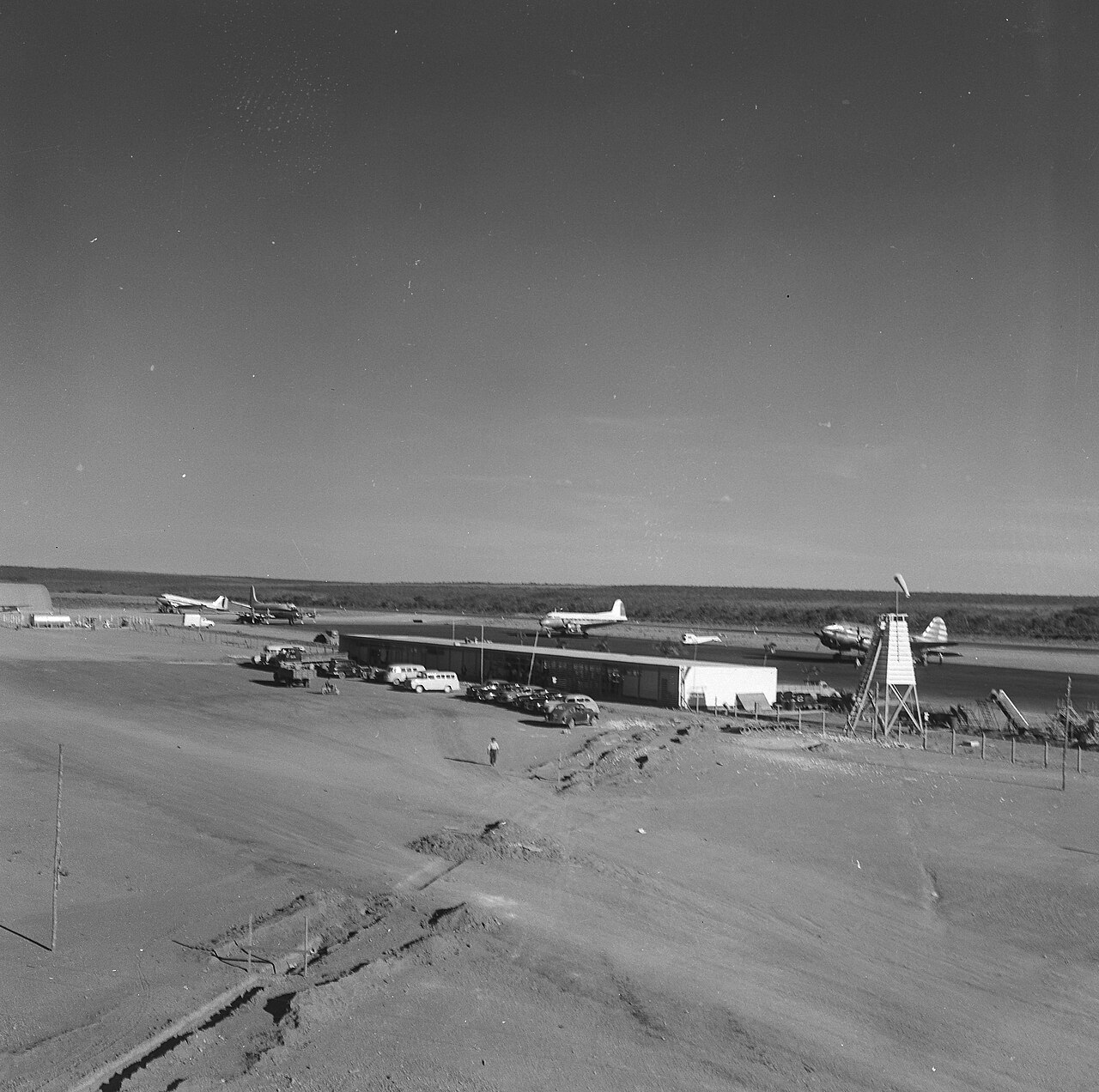
The dream of moving Brazil's capital inland stretches back further than most people realize. His original vision placed the city upstream on the São Francisco River, though the bill never passed when Pedro I dissolved the Assembly. Yet the project was deemed too costly and ambitious for the governments of the Old Republic.
A City Shaped Like an Airplane
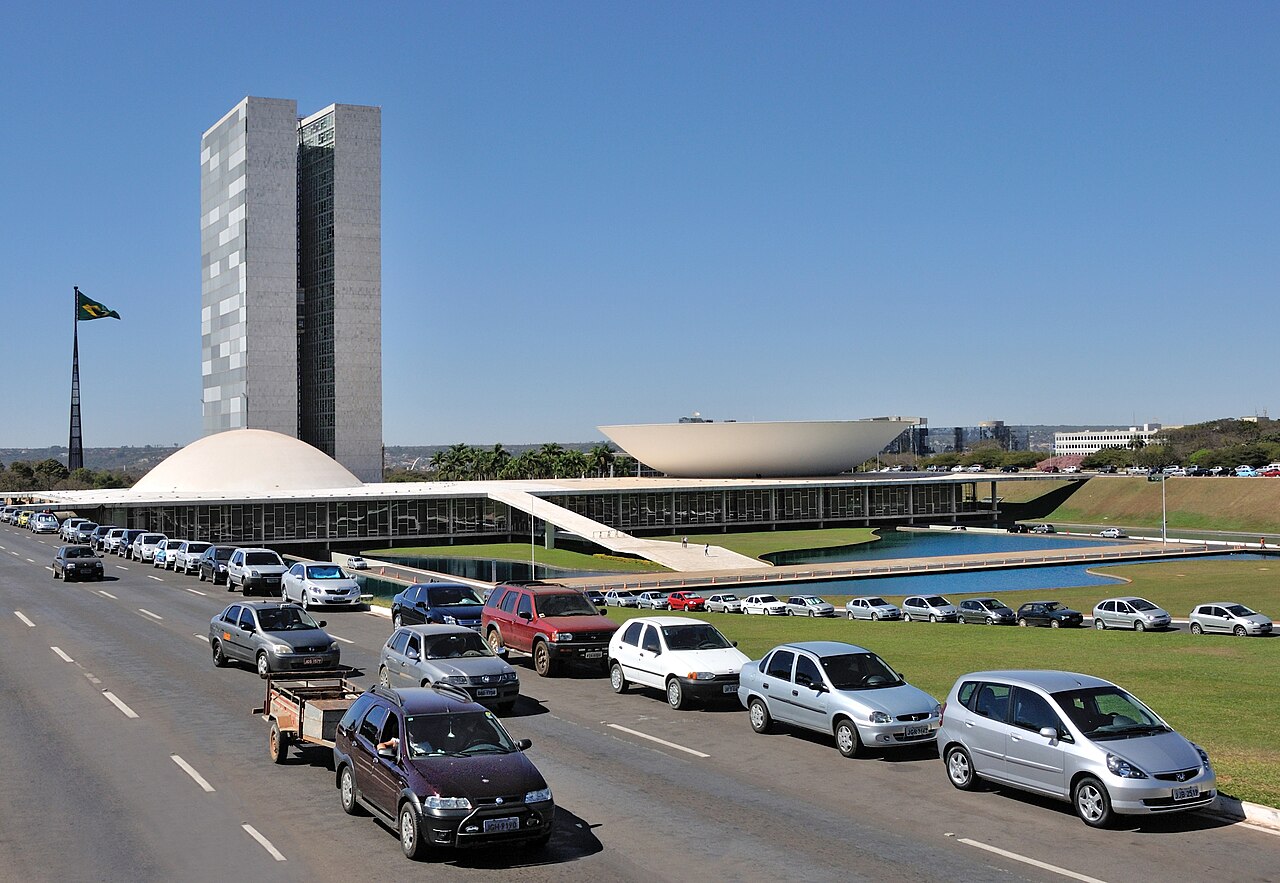
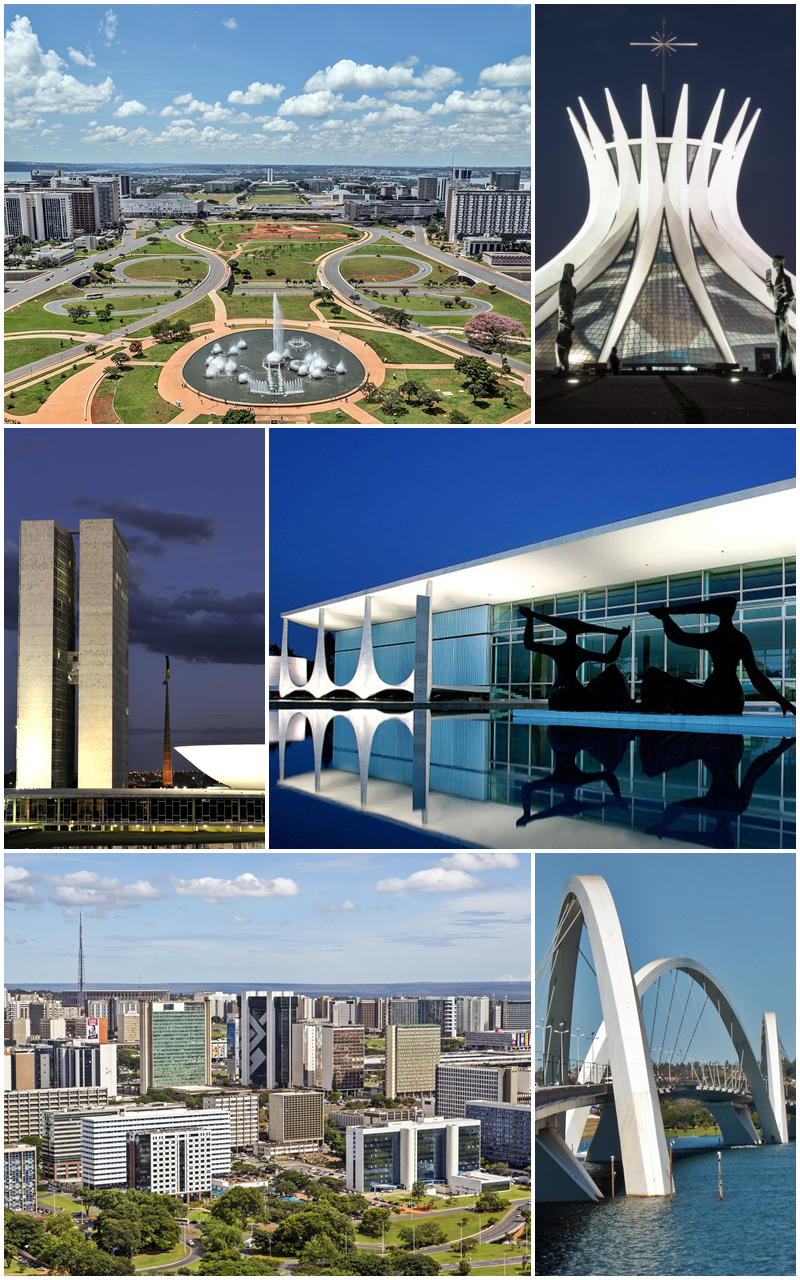
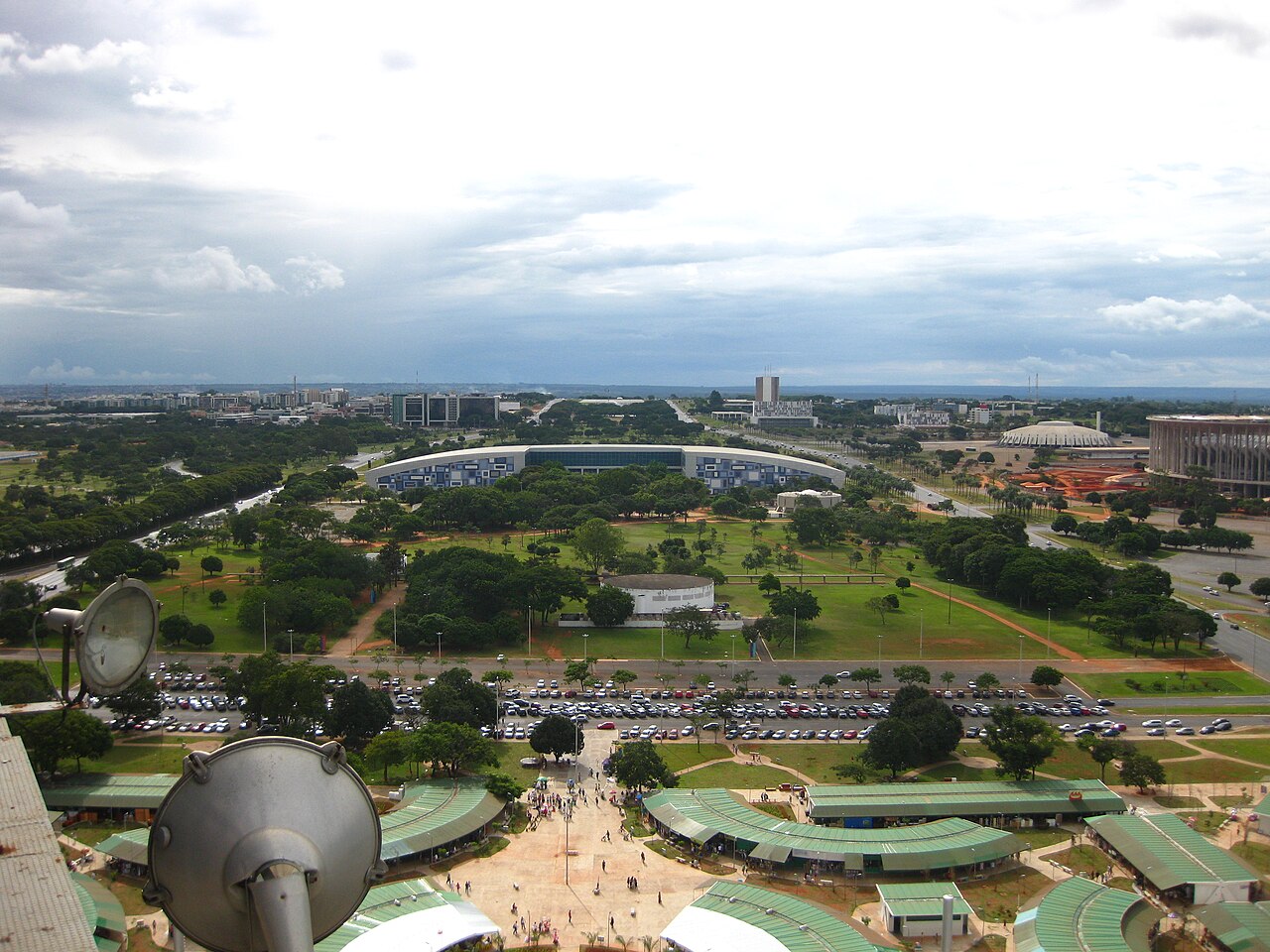
Brasília's layout is immediately recognizable: a cross-axial design that evokes an airplane, a dragonfly, or a bird in flight. The 'fuselage' is the Monumental Axis, a pair of wide avenues flanking a large central park, while the 'cockpit' houses Praça dos Três Poderes, the square named for the three branches of government—executive, legislative, and judiciary—that surround it. Oscar Niemeyer then translated that framework into the city's iconic white modernist architecture, and landscape architect Roberto Burle Marx shaped the green spaces. The city is divided into numbered blocks and specialized sectors—a Hotel Sector, a Banking Sector, an Embassy Sector—giving it a functional order few capitals share.
Seat of Power and Global Hub
Brasília concentrates an extraordinary density of political and diplomatic function. Its legal status is unique: Brasília is an administrative region rather than a municipality, and the name is commonly used as a synonym for the entire Federal District, which is subdivided into 35 administrative regions. The Plano Piloto, one of those regions, contains the originally planned city and its government buildings. The Federal District itself is considered Brasília's city area by IBGE, while the local government defines the metropolitan area to include the full district plus 12 neighboring municipalities in Goiás. With a population of 2.8 million, Brasília ranks as Brazil's third-largest city after São Paulo and Rio de Janeiro, yet among major Latin American cities it holds the highest GDP per capita. Its international airport, the third-busiest in the country, connects the capital to all major Brazilian cities and select international destinations.
Cultural Milestones and a Name with Roots
Brasília's cultural footprint extends well beyond architecture. These achievements, layered atop its modernist built environment, cement Brasília's identity as a city where design, governance, and global culture intersect.
Gallery
Frequently Asked Questions
Who is Brasília?
Brasília is the purpose-built capital city of Brazil, sitting on the Brazilian Highlands in the country's Central-West region. It functions as the Federal District and is home to roughly 2.8 million people.
What are Brasília's powers and role?
As Brazil's national capital, Brasília hosts the federal government, legislature, and presidential offices. It was engineered from the ground up as a planned city, making it the administrative nerve center of the entire country.
How does Brasília's story end?
Brasília has no final chapter — it remains Brazil's active capital and continues to evolve while preserving its original urban grid. Its narrative is still being written through ongoing civic and cultural life.
Why is Brasília important?
Brasília stands as one of the boldest examples of mid-twentieth-century urban planning, conceived under President Juscelino Kubitschek in the 1950s. Its striking modernist architecture and deliberate layout have made it a globally recognized landmark of visionary design.
Who founded Brasília and when was it inaugurated?
President Juscelino Kubitschek launched the project in 1956 to relocate the capital inland from Rio de Janeiro. The city was officially inaugurated on April 21, 1960, and has served as Brazil's seat of power ever since.
More in Cities Of The World 1-24
Spotted an error? Know more?
This is a living reference — every entry is fact-audited, and reader corrections feed straight into our audit queue. Suggest an edit · See this site's audit record